A quarter-century after its founding, the Robert Mondavi Institute for Wine and Food Science is a place of groundbreaking discoveries, collaborations and educational offerings attracting top-notch students, scholars and researchers.
The academic year is coming to a quick end with students preparing for final exams and commencement ceremonies on the horizon. The Robert Mondavi Institute closes out the term with two amazing sold-out events.
Iron Brew is one of those UC Davis traditions that sounds almost too good to be real. Every winter, students in FST 102B Practical Malting and Brewing spend weeks formulating recipes, brewing batches on nanobreweries in the RMI pilot brewery, and competing for the chance to have their beer produced commercially.
Past winners, including Off the Clock, Caledonian Nights, Mighty Gale Ale, and Brew La-La have gone from campus fermentors to taps at The Gunrock, Sudwerk Brewing Co., and now Dunloe Brewing .
Students are finishing their finals and next week is spring break! I always look forward to the spring quarter and am excited to share two events that showcase UC Davis alumni.
What happens to your favorite wine or beer when the climate that shaped it starts to change?
That question was at the heart of Sips of Change, a dynamic panel at Terra Madre Americas, where UC Davis scientists and an Argentine winemaker came together to talk adaptation, tradition, and what fermented beverages might look like in the decades ahead.
On a crisp autumn morning in Davis, the scent of malt and hops drifted through the Anheuser-Busch InBev Pilot Brewery. Among the gleaming stainless steel, for the first time, all three UC Davis brewing professors stood side by side in the new brewery to celebrate a program that has shaped the modern beer world.
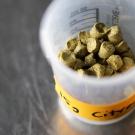
Walk into any brewery and you'll find that after brewing beer massive amounts of "spent grain" are leftover. Every year, America's 9,000 breweries produce roughly 20 billion pounds of spent grain, enough to fill a football stadium several times over.
The food science and technology major offered at UC Davis is a well-rounded mix of theory and practice, with a hands-on learning approach being both effective and expected at California’s No. 1 agricultural school. This program is internationally recognized and is one of only 88 IFT HERB approved programs , but how did this niche major come to be?
Crafting beer is a precise science. Brewers know that various types of yeast and different fermentation methods control how beer will taste. But a phenomenon known as “hop creep” can sometimes throw a brewer for a loop.
A complex, but easy-drinking Scottish export ale, with a copper hue and hints of caramel, was crowned the top beer at this year’s Iron Brew competition.
Being a wine enthusiast, I eagerly research the terroir, or sense of place, of each wine I drink. Whenever I open a bottle, I want to dig deeper than general facts about the region where the wine came from. I enjoy reading any information I can find about the vineyard’s soil, climate, or terrain, in addition to the specific practices, the winemaker implemented when crafting the wine. I’m a sucker for the wineries that list all sorts of details on the label or the website; I feel so much more connected to these wines. When I drink them, I can appreciate what made them this way.